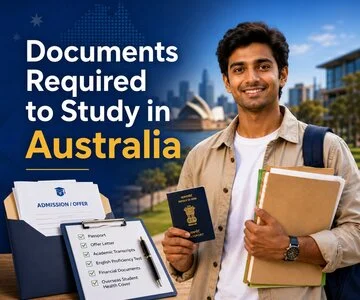
Australia Admission Process for Indian Students: 2026 Enrolment Workflow

Australia Admission Process for Indian Students

The Australia admission process for Indian students is a seven-step enrolment workflow: shortlist a CRICOS-registered course, apply, receive a Letter of Offer, accept and sign the written agreement, pay your tuition deposit and arrange OSHC, receive the electronic Confirmation of Enrolment, then move to the Subclass 500 visa. In January to September 2025, 139,720 Indian students were enrolled in Australian institutions, up 4 percent over 2024, keeping India among Australia’s top two source countries (Australian Government Department of Education, reported via ICEF Monitor, 2025). What makes this guide different: we frame your offer letter as a legal written agreement and show every deposit and OSHC figure in INR.

INR figures use an indicative AUD-INR rate of Rs 68.19 (Google Finance, 2026-06-01); rates move daily, so treat conversions as illustration, not a quote.

Key Takeaways

  • The admission workflow runs in order: shortlist, apply, Letter of Offer, accept, deposit plus OSHC, eCoE, then Subclass 500 visa.
  • Your accepted Letter of Offer becomes a legally binding written agreement under the ESOS Act 2000 and National Code 2018.
  • A CoE/eCoE is usually issued only after you accept the offer, clear any conditions, and pay the acceptance deposit and any fees the provider requires.
  • OSHC is mandatory for your whole stay and is commonly quoted around AUD 600-800 a year (approx. INR 41,000-55,000) for a single student, with premiums varying by provider.
  • Some providers (RMIT, for example) issue the CoE within about five working days once payment clears and all conditions are met; timelines otherwise vary by university, document checks and intake pressure.
  • Your offer and eCoE are not your visa. The Genuine Student requirement is assessed at the Subclass 500 stage.

The Australian university application process is a sequential chain: a CRICOS-registered shortlist leads to a Letter of Offer, acceptance and deposit produce a Confirmation of Enrolment (eCoE), and only that eCoE unlocks the Subclass 500 visa. Per the Australian Government Department of Education (PRISMS FAQs, 2026), the eCoE is the evidence the Department of Home Affairs requires.

The Australian admission process 2026 is a relay: you can’t skip a baton, and many families are blindsided to learn the visa is the last step, not the first. Knowing the order protects your deposit. Your hub for course detail is our study in Australia guide, and our Australian intakes and timing breakdown covers the February, July and trimester cycles.

StepWhat happensWho issues / actsTypical time (indicative)
1. ShortlistPick CRICOS-registered courses that fit your marks and budgetYou (or your agent)2-4 weeks
2. ApplySubmit transcripts, English test, passport, SOPYou / agent to the university1 day to submit
3. Letter of OfferConditional or unconditional offer arrivesThe university2-6 weeks
4. AcceptSign and accept the written agreementYouSame day
5. Deposit + OSHCPay initial fees and buy health coverYou1-2 weeks
6. eCoEConfirmation of Enrolment is generated in PRISMSThe university~5 working days (RMIT); varies by provider
7. Subclass 500Lodge the student visa applicationYou to Home AffairsSeparate process

Steps 3 to 6 sit with the university, while the visa in step 7 sits with the Department of Home Affairs. That split is the single most useful thing to grasp before you start.

How the February and July intakes shape your timeline

Australia runs two main intakes: Semester 1 (February or March) and Semester 2 (July), with some providers also offering trimester starts (Study Australia, Understanding mid-year entry, 2026). Applications for the July (mid-year) intake usually open around April, so the cycle you target sets the timeline backwards.

IntakeWhen to start shortlistingWhen to applyVisa buffer
FebruaryMay-August (previous year)August-NovemberDecember-January
JulyOctober-JanuaryJanuary-AprilMay-June
Mid-year / trimesterMarch-Junearound April onwardvaries

How to apply to Australian universities from India

To apply to Australian universities from India, an applicant chooses a CRICOS-registered course, confirms the academic and English entry requirements are met, then applies online via the provider's website or an application form. According to Study Australia (How to apply to study, 2026), successful applicants receive a letter of offer and acceptance form.

  1. Choose a CRICOS-registered course and provider.
  2. Check you meet the academic and English entry requirements.
  3. Prepare your documents (transcripts, passport, English result, SOP, plus LOR, CV or portfolio where needed).
  4. Apply directly on the provider’s website or through a registered education agent.
  5. Wait for your Letter of Offer, then accept, pay the deposit and arrange OSHC.

What does it cost to apply? The snapshot below is orientation, not a full breakdown.

ItemTypical note
University application feeVaries by university; some charge none
Tuition depositOften one semester’s fees, or a provider-set amount
OSHCRequired for the full visa duration
Visa feeSeparate from admission; from AUD 2,000 (approx. INR 1.36 lakh) per application at the Subclass 500 stage, per Study Australia from 1 July 2025

Direct application or education agent: which route should you choose?

Indian applicants have two main routes for applying to study in Australia: directly through a university's international admissions portal, or through a registered education agent. According to Study Australia (How to choose the right education agent for you, 2026), an agent can help prepare and submit an application, and every Australian university publishes the agents it works with.

So do you apply yourself, or use a registered education agent who helps international students prepare and submit applications?

RouteBest forWatch-outs
Direct university portalFull control of one or two clear choices; no middle layerYou manage every document, condition and deadline yourself
Registered education agentSeveral applications at once, or help reading conditionsSome agents are paid by providers, others may charge a service fee; get any fee and refund terms in writing, and use only agents your shortlisted universities list
TAC / UAC (special cases)International students finishing Australian Year 12 or the IB inside AustraliaMost students applying from India apply direct or via an agent, not through a Tertiary Admission Centre

Most students applying from India go directly to the university or through an authorised agent. The Tertiary Admission Centre (the state body, such as UAC) mainly matters for those finishing Australian Year 12 or the IB inside Australia.

Red-flag warning. Study Australia is blunt on this: no education agent can guarantee a Student visa, course success or any permanent-residency or migration outcome. If an agent "guarantees PR" or a visa as part of an offer, treat that as a red flag and walk away.

Parents, note: if an agent charges a service fee, get the amount, services and refund policy in writing. Don’t pay a disguised “university application fee” unless the university itself lists that fee, since the only mandatory cost of applying to study in Australia is the university’s own.

What do you need ready before you submit your application?

Before submitting an Australian application, an Indian student needs a CRICOS-valid course shortlist, academic transcripts, an accepted English test, and a passport plus statement of purpose. According to the Australian Government (CRICOS register, 2026), a course must be CRICOS-registered before a student can enrol on a visa, so checking CRICOS first prevents wasted applications.

Start with the register. CRICOS (the Commonwealth Register of Institutions and Courses for Overseas Students) lists every provider and course approved to enrol international students, so confirming a course there is the first box to tick in the admission requirements for Australia.

Your readiness checklist for the Australian university application process is short but strict:

  • Academic transcripts for Class 12 (CBSE or state board) or your bachelor’s degree.
  • An English test: IELTS, PTE or TOEFL, matched to the score your shortlisted course asks for.
  • A valid passport and a focused statement of purpose (SOP).
  • A realistic tuition budget you and your family have actually discussed.

On budget, the tuition you commit to at acceptance is what your education loan is sized against when you and your family sit down with HDFC Credila, Avanse or SBI. Keep it distinct from the separate financial-capacity proof the Subclass 500 visa checks later.

What marks and English scores do Indian applicants actually need?

Australian universities assess Indian applicants on academic results plus an accepted English test, typically IELTS Academic 6.5, no band below 6.0. According to Curtin University (Accepted English qualifications, 2026), that equates to PTE Academic 58 or TOEFL iBT 79. Exact bars vary by course and university, so these figures are indicative, not fixed cut-offs.

These numbers are indicative and vary by course and university, so treat them as a reference. For undergraduate entry, your Class 12 / Higher Secondary Certificate is assessed. For example, the University of Wollongong lists 65% for some Indian state-board HSC applicants entering its Bachelor Degree (Group 1), while other boards and more selective courses can require higher (University of Wollongong, International entry requirements – India, 2026). For a master’s, you’ll need a recognised bachelor’s degree, and the same University of Wollongong guidance sets an indicative 50% minimum for standard master’s entry.

On English, IELTS, PTE and TOEFL are all accepted, with a typical bar of IELTS 6.5 (no band below 6.0), PTE 58 or TOEFL 79. What about backlogs or an academic gap? Universities assess your overall record, so a few backlogs aren’t automatically disqualifying, though they can affect how competitive you look for selective courses. On documents, you’ll always need transcripts, a passport and an SOP; postgraduate, design, MBA and research applications usually add an LOR, CV or portfolio, and some universities charge an international application fee while others charge none (RMIT University, Apply to RMIT, 2026).

Applicant typeAcademic (indicative)English (typical)Key extra documents
UndergraduateClass 12 / HSC; UOW: 65% (some state-board HSC, Bachelor Group 1); higher for other boards/selective coursesIELTS 6.5 (no band <6.0), PTE 58, TOEFL 79Transcripts, passport, SOP
Postgraduate (master’s)Recognised bachelor’s; UOW indicative 50% minimumIELTS 6.5 (no band <6.0), PTE 58, TOEFL 79Plus LOR, CV / portfolio for design, MBA, research

For the full band tables, percentages by board and the money-proof mechanics, work through our requirements for studying in Australia guide to match a real number to your shortlisted course before you borrow.

Conditional or unconditional: what does your Australian Letter of Offer mean?

An Australian Letter of Offer is the university's formal admission decision, issued as unconditional or conditional. According to Swinburne University of Technology (Letter of offer, 2026), a conditional offer requires documents to clear conditions before it converts, while an unconditional has none. The distinction sets whether a student can accept and pay now or must first clear conditions.

When your Australian university offer letter lands, read the top first. An unconditional offer (a full offer) leaves nothing outstanding; a conditional offer lists conditions, such as final marks or an English result, that you must satisfy before it converts.

Unconditional (full) offerConditional offer
What it meansAccepted, no requirements leftAccepted subject to conditions
What’s outstandingNothingFinal results, English score or document checks
How to clear itNot applicableSubmit the proof, university verifies it
Can you accept yet?Yes, accept and payNot until conditions are met

Clearing a conditional offer without losing money

Here’s where families lose deposits, so slow down. First, identify each condition in writing, submit the proof, and wait for the university to convert the offer into a full one. Avoid paying a deposit on a conditional offer unless the provider clearly allows it and the refund terms are in writing; in most cases, wait until the offer is converted, because if you can’t meet a condition your money may sit at risk. And read the refund clause in the written agreement before you pay, not after.

Why does that written agreement matter so much? Under Australian law in 2026, the ESOS Act 2000 (the Education Services for Overseas Students Act) and Standard 3 of the National Code 2018 require a provider to enter a written agreement with you before or at acceptance, and your accepted offer letter can form that agreement, setting out the course, fees, refund policy and conditions (Australian Skills Quality Authority, ASQA). In plain terms: the moment you accept, that PDF becomes a contract.

Accepting your offer: the deposit and OSHC that turn it into enrolment

Accepting an Australian university offer means paying an initial tuition deposit and arranging Overseas Student Health Cover (OSHC) so the provider can enrol the student. According to Study Australia (Overseas Student Health Cover, 2026), OSHC is mandatory for the entire duration of study. The deposit and OSHC convert a signed offer into confirmed enrolment and trigger the eCoE.

Two payments turn your signed offer into a confirmed enrolment in Australia. The first is the tuition deposit. As of the 2026 intake, Monash University requires international students without a sponsor to pay a deposit equal to one semester’s fees, including OSHC, to accept the offer, after which the Confirmation of Enrolment is issued (Monash University). For a course costing AUD 40,000 a year, that semester deposit is roughly AUD 20,000 (approx. INR 13.6 lakh) at the rate above.

Why does the deposit matter so much? A provider usually generates your eCoE only after you accept, clear conditions, and pay the acceptance deposit and any required fees. No deposit, no eCoE, no visa. That’s the chain.

The second payment is health cover. In 2026, OSHC (Overseas Student Health Cover) is mandatory for the entire duration of your study in Australia, and the Department of Home Affairs requires you to maintain it for your whole stay (Study Australia). Single OSHC is commonly quoted around AUD 600-800 a year (approx. INR 41,000-55,000), but premiums vary by provider and policy length, so get a live quote from an approved provider such as ahm, nib, Bupa, Medibank or Allianz Care. Build the paperwork with our documents required for Australia checklist.

Order check. Conditions cleared → sign the written agreement → pay the deposit → buy OSHC → eCoE generated. Skip nothing, and avoid paying a deposit on a conditional offer you haven't converted unless the provider allows it in writing.

How does your eCoE come through PRISMS, and how long does it take?

The electronic Confirmation of Enrolment (eCoE) is generated through PRISMS once the tuition deposit clears and the file is complete. According to RMIT University (Accept your offer, 2026), RMIT issues the CoE within five working days of payment. Timelines vary across universities, so five working days is a best case, not a universal guarantee.

Once your deposit clears, the university mints your Confirmation of Enrolment inside PRISMS (the Provider Registration and International Student Management System, the government database that records overseas enrolments). That eCoE is the evidence of enrolment Home Affairs requires before you lodge a Subclass 500 application.

How long will it take you? RMIT publishes five working days after payment; other universities vary with payment clearance, document checks and intake pressure, so plan for a window.

~5 working days

RMIT, after payment + conditions met RMIT University, 2026

Varies

by university, payment clearance and intake pressure Indicative, 2026

Once that Confirmation of Enrolment is in hand, the university’s part of the enrolment process in Australia is done, and an early deposit pays off: a faster eCoE leaves more runway for the Subclass 500 step.

Your offer is not your visa: what the Subclass 500 step needs next

This is the step where Indian families relax too early. The eCoE feels like the finish line, but it's only the entry ticket to the Subclass 500 student visa, which the Department of Home Affairs decides separately.

At the visa stage, the assessment changed recently. Since 23 March 2024, the Genuine Student (GS) requirement replaced the older Genuine Temporary Entrant (GTE) test for student visa applications, and it is assessed at the Subclass 500 stage, the step after the eCoE (Australian Government Department of Home Affairs). We keep the visa mechanics, GS answers, fee and document checklist in our Australia student visa guide.

  • Offer = admission decision from the university.
  • eCoE = proof of enrolment, generated in PRISMS after payment.
  • Subclass 500 = permission to enter, a fresh Home Affairs decision.

The practical takeaway for you and your parents: don’t book flights or pay the full year’s tuition the day the eCoE arrives.

Where Indian applicants slip up in the admission process

Most slip-ups here aren’t about marks, they’re about misreading the workflow. Across the students we’ve counselled in Hyderabad and Tirupati, two errors repeat almost every intake.

  • Confusing the offer letter with the eCoE or the visa. We’ve seen families assume the offer means the visa is “basically done.”
  • Missing the written-agreement terms. The fees, refund policy and conditions are all in the accepted offer. Skim it and you may agree to something you didn’t notice.

From the offer-acceptance briefings we ran for our 2026 intake, the families who spend ten minutes at step 4 reading the agreement line by line are the ones who never call us in a panic later. For the parent researching this for a child, that read is the highest-value thing you can do.

Get in Touch

Frequently Asked Questions

Read the conditions in your offer and clear each one, usually final Class 12 or bachelor results, an English score, or document verification. Send the proof to the university or your agent. Once verified, the conditional offer converts to a full offer you can accept.

Most Australian universities issue a Letter of Offer within two to six weeks of a complete application, faster through direct online portals. The usual delays are missing transcripts, no English result or an incomplete passport copy. A clean, fully documented file speeds things up most.

Before the visa, always. Your deposit triggers the Confirmation of Enrolment, and that eCoE is what the Department of Home Affairs needs before you lodge a Subclass 500. The order never changes: offer, accept, deposit plus OSHC, eCoE, then visa.

Yes. The eCoE proves enrolment, but it isn’t a visa. The Subclass 500 is decided separately, with the Department of Home Affairs assessing the Genuine Student requirement, your finances and health. That’s why the refund policy in your written agreement matters before you pay.

There’s no single national cut-off. The University of Wollongong lists 65% for some Indian state-board HSC applicants entering its Bachelor Degree (Group 1), while other boards and more selective courses can require higher. Treat 65% as one university’s example, not a national benchmark.

IELTS isn’t the only option. PTE Academic 58 and TOEFL iBT 79 are widely accepted, and some universities take other English evidence. Remember that course English requirements and the student-visa English requirement are separate checks, so confirm what your course accepts first.

Mid-year July applications usually open around April, per Study Australia. Start several months ahead so offer, deposit, eCoE and the Subclass 500 visa all finish before your intake begins. For a February start, begin shortlisting the previous year to keep a comfortable buffer.

No. The electronic Confirmation of Enrolment is your evidence of enrolment, generated inside PRISMS once your deposit clears. The Subclass 500 student visa is a separate Department of Home Affairs decision. One proves you’re enrolled, the other gives you permission to enter.

It varies. Many universities ask for around one semester’s fees, as Monash does for unsponsored international students, while some set a flat figure instead. Whatever the amount, the deposit is always paid before your eCoE is issued, so it sits early in the chain.

Yes. You can apply before final results and receive a conditional offer. You then clear the results condition, submit proof, and the university converts it to a full offer before you accept and pay. Avoid paying a deposit until the offer is converted, unless the provider clearly allows conditional acceptance and gives the refund terms in writing.

Universities assess your overall academic record rather than a single number. A few backlogs aren’t automatically disqualifying, though they can affect how competitive your application looks for selective courses. The impact varies by university and course, so a strong overall profile matters most.