
Best Universities in France for International Students
- Last Updated on: December 9, 2025 by
- Sridhar Kongara
France is one of the popular destinations in Europe for engineers, managers, designers and researchers who want solid education plus strong links to industry. When families look at universities in France for international students, they usually ask four basic questions:
- How do public universities and private institutions actually work?
- Which top ranked universities should be on the shortlist?
- What are the real tuition fees, living costs and living expenses in euros and rupees?
- Can I find programmes in English, and what are the admission and student visa rules?
This guide explains the main higher education institutions such as Sorbonne University, Université Paris-Saclay, Paris Saclay University and University Grenoble Alpes, and compares France universities from the point of view of non EU students and Indian students.
Universities in France for International Students (Public and Private)
French higher education is built around a few main types of institutions that welcome international students.
Main types of higher education institutions
| Type of institution | Typical focus | Main degrees | Who it suits |
|---|---|---|---|
| Public universities | Broad science, arts, law, economics, engineering | Licence (bachelor’s degree), master, doctorate | Students who want affordable fees and recognised degree |
| Grandes écoles | Selective engineering, management, policy | Mainly master level | Strong profile, willing to handle a competitive admission process |
| Private universities / institutes | Business, design, hospitality, MBA, niche programs | Bachelor, master and professional programme | Students ready for higher fees for targeted training |
| IUT / technical institutes | Applied tech & industry courses | Short technical degree | Hands-on learners who want clear job roles |
Many universities in France are public, and the state covers a large part of the cost of education. That is why non EU students still pay far less in public universities than in many other countries.
Take first step towards your Study Abroad Journey
Top Public Universities in France
When people search for France for international students, the same top universities appear again and again. These French universities combine strong research, good city locations and wide courses for international students.
Example profiles of leading public universities
| University | City | Key areas | Why it matters for international students |
|---|---|---|---|
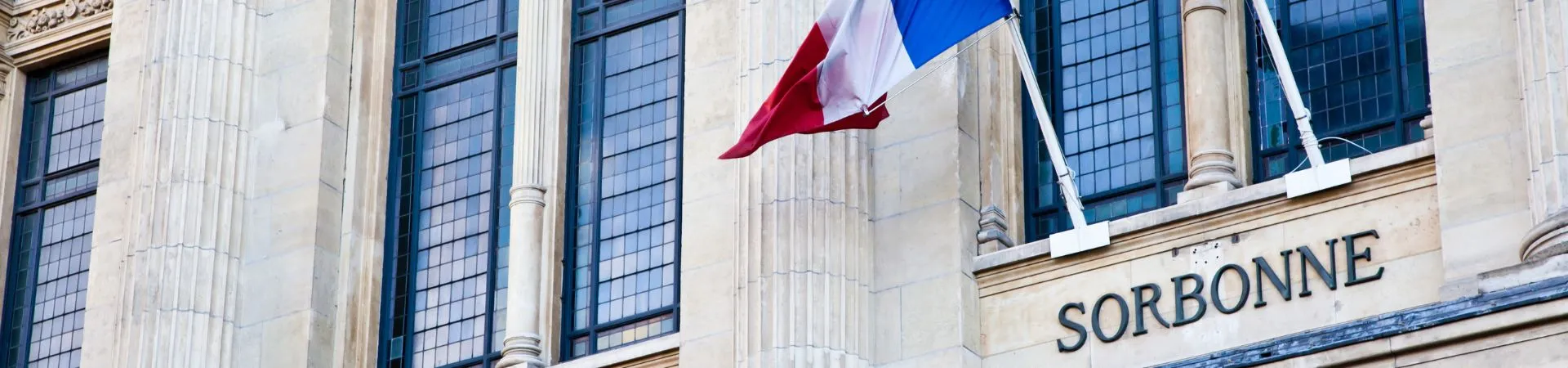
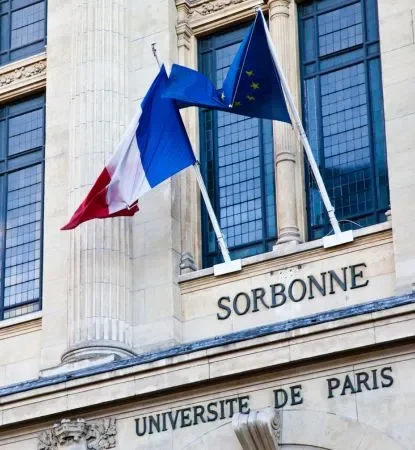
| Sorbonne University | Paris | Science, maths, humanities, arts | Historic brand, strong labs, central Paris life, many English-friendly programmes at master level |
| Université Paris-Saclay / Paris Saclay University | Paris-Saclay area near Paris | Advanced science, data, engineering, life sciences, management | Sits near the top of global tables and is one of the most top ranked universities in the world for maths and physics |
| Other université Paris campuses | Across Paris | Medicine, social science, law, economics | Good choice for students who want Paris city life plus strong academic tracks |
| University Grenoble Alpes | Grenoble | Engineering, earth science, environment, digital | Mountain city with a big student crowd, strong value for non EU students and a rising share of English-taught programs |
Because of this mix of quality and affordable fees, many French universities in and beyond Paris act as a top choice for masters in science, engineering, arts and social sciences.
Public university tuition fees for non-EU students
Official guidance for non EU students in public universities in France shows typical annual tuition fees as:
| Level | Annual tuition in EUR | Approx. INR / year |
|---|---|---|
| Bachelor’s degree (Licence) | €2,770 | ~₹2.9 lakh |
| Master | €3,770 | ~₹3.9 lakh |
These fees are set nationally, and several universities use scholarships or internal waivers so some international students actually pay lower amounts.
Why choose a public university?
Public France universities work well for international students who:
- Want low tuition fees but still expect high quality education
- Prefer a full degree route in science, engineering, social science, political science, law, architecture or arts
- Are open to studying in France with at least basic French for daily life
The main limit is that many strong courses in université Paris and regional campuses are still mainly in French, so language planning is important.
Course Finder
Search from 1500+ English taught programs offered by French Institutions.
its easy, search by program name of by stream, specialization & Education level

Top Private Business Schools in France
Alongside public universities, France is famous for business and management education. Top Schools like HEC Paris and other grandes écoles attract international students who focus on corporate careers, MBA routes or specialist top courses in fields such as luxury or data.
What private institutions typically offer
| Level | Typical programmes | Notes for non-EU students |
|---|---|---|
| Bachelor | BBA, bachelor in management, international business | Often full-English programmes, strong internship link |
| Master / MSc | Finance, marketing, supply chain, digital business, data & AI | Suits data specialists who want applied learning plus corporate projects |
| MBA | General management and executive paths | Needs professional experience and stronger financial resources |
For non EU students, tuition fees in private institutions tend to sit in these bands.
| Type of provider | Typical annual fees (EUR) | Approx. INR / year |
|---|---|---|
| Mid-range private schools | €4,000 – €8,000 | ~₹4.2 – 8.3 lakh |
| Business schools | €8,000 – €15,000 | ~₹8.3 – 15.7 lakh |
| Elite tracks and some MBA | €18,000 – €30,000+ | ~₹18.8 – 31.3 lakh+ |
Even with these higher fees institutions maintain close contact with companies and structured employability support, which is why many universities in the private space remain a serious option for France for international students aiming at fast placement.
Cost Comparison Between Public and Private Universities in France
| Type | Level | Tuition (EUR / year) | Approx. INR / year | Comment |
|---|---|---|---|---|
| Public universities | Bachelor’s degree | €2,770 | ~₹2.9 lakh | Fixed state rate for most non EU students |
| Master | €3,770 | ~₹3.9 lakh | Strong value among top universities in Europe | |
| Private universities / institutes | Bachelor | €5,000 – €15,000 | ~₹5.2 – 15.7 lakh | Wider range of courses |
| Master / MSc / MBA | €5,000 – €30,000+ | ~₹5.2 – 31.3 lakh+ | Best-known brands usually near the upper band |
Even in the upper band, France offers more affordable English-taught programme choices than several big English-speaking countries, especially when you combine fees with total living expenses.
Living costs and typical monthly budget
For international students, the real decision is not just about fees but about living costs in Paris, Lyon and other cities. Average estimates for one person are:
| Location | Average monthly cost (EUR) | Approx. INR | Notes |
|---|---|---|---|
| Paris | €1,200 – €1,500+ | ~₹1.25 – 1.57 lakh+ | Highest rent and transport, largest set of institutions |
| Lyon, Toulouse, Bordeaux, Nice | €900 – €1,200 | ~₹94,000 – 1.25 lakh | Big-city life with balanced cost |
| Cities like Grenoble, Nantes, Lille | €800 – €1,000 | ~₹83,000 – 1.04 lakh | Often more affordable for Indian students and other international students |
Simple monthly breakdown for many students:
| Expense | Range (EUR) | Approx. INR |
|---|---|---|
| Rent (room / shared flat) | €400 – €900 | ~₹41,800 – 93,960 |
| Food | €200 – €300 | ~₹20,880 – 31,320 |
| Local transport | €40 – €70 | ~₹4,176 – 7,308 |
| Phone & internet | €30 – €50 | ~₹3,132 – 5,220 |
| Personal & study costs | €150 – €250 | ~₹15,660 – 26,100 |
Choosing a smaller city instead of central Paris can cut yearly living expenses by thousands of euros over a full degree.
Universities in France That Teach in English
One big reason France for international students has grown is the steady rise of English-medium programs.
Growth of English-taught degree options
- Public universities now list many English-taught master programs in science, data, engineering, management, economics and various fields linked to digital jobs.
- Business schools and private institutes run full English tracks in business, finance, supply chain and management.
As a result, studying in France without strong French on day one is now realistic for a large group of international students.
Where English-taught programmes are common
| Type | Examples | Notes |
|---|---|---|
| Universities in France around Paris | Sorbonne University, several université Paris campuses, Université Paris Saclay | Wide English offers in science, engineering, academic research-oriented degree paths |
| Regional public universities | University Grenoble Alpes, Strasbourg, Lille, Montpellier | Mix of English-taught master tracks with more affordable city living costs |
| Business schools | Including schools around Paris and Lyon | Heavy focus on global business, data and management programmes |
For many international students, these English options make France universities a strong rival to big English-speaking countries, especially when you compare full cost over a two-year master.
Language and admission requirements
For English-medium programmes, typical admission requirements are:
- Completed bachelor’s degree in a linked area for master-level entry
- English-language proof (IELTS, TOEFL or similar)
- Sometimes a Medium of Instruction letter instead of test scores, depending on the university
- Academic file with transcripts, CV and short academic goal statement
Even if the programme is fully in English, planning to learn French is still wise. It improves access to part-time jobs, internships and the local culture, and gives an edge if you stay after studying in France.
How to Use This Information as an International Applicant
To choose between the many universities in France for international students, you can use a simple checklist:
1. Clarify your route
- Low-fee public bachelor’s degree in science or arts?
- Targeted master in data, engineering, design or business?
- Career-driven MBA with strong network?
2. Pick city and campus wisely
- Choose Paris or Lyon if you want big-city jobs and do not mind higher living costs.
- Look at University Grenoble Alpes and other regional institutions if you want more space and lower fees plus good education.
3. Compare total cost, not just tuition
- Add tuition fees and estimated living expenses in euros and rupees.
- Check which scholarships you realistically fit and when deadlines fall.
4. Understand the visa and next steps
- Read carefully about the student visa, the VLS TS, and post-study options.
- Check how France offers stay-back paths in some programs and how world employers view that degree.
Because France combines public universities with low fees, respected top ranked universities in Paris and beyond, strong business schools, rich culture and real support for international students, it makes France stand out as a practical, long-term study option. For many young people comparing France for international study with larger English-speaking countries, that balance of quality, programme choice and cost makes France a very sensible top choice.
Frequently Asked Questions
What are the Best Institutions in France for Indian Students
As an Indian student, go for PSL, HEC Paris or Sorbonne, as they are highly ranked with specialization in engineering, humanities and business.
Why France is a Top Destination for Education?
Three main reasons make France an academic hub – Affordable tuition fees, highly ranked institutions and cultural richness. It offers strong prospects for graduates.
How much does it costs to study in public universities in France
Public Institutions charge €200 – €4,000 per year for most of the programs, as far as living expenses are considered, you need €800 – €1200 per month outside Paris
Ready to study at one of the best universities in France for international students? AOEC India helps you choose the right French university based on your academic profile, career goals, and budget. From university shortlisting and application support to visa guidance, our experts are here to simplify your study abroad journey. Connect with AOEC India today and take the first step toward studying in France with confidence.